A Legacy of Science: One Family’s Multigenerational Connection to Cawthron
26 February 2026
This summer, Nelson hosted a young scientist whose family story is deeply woven into the history of the Cawthron Institute. For Yuki Hughes, her time at Cawthron was not only an exciting step in her scientific career, but also a continuation of an multigenerational connection that spans more than a century.
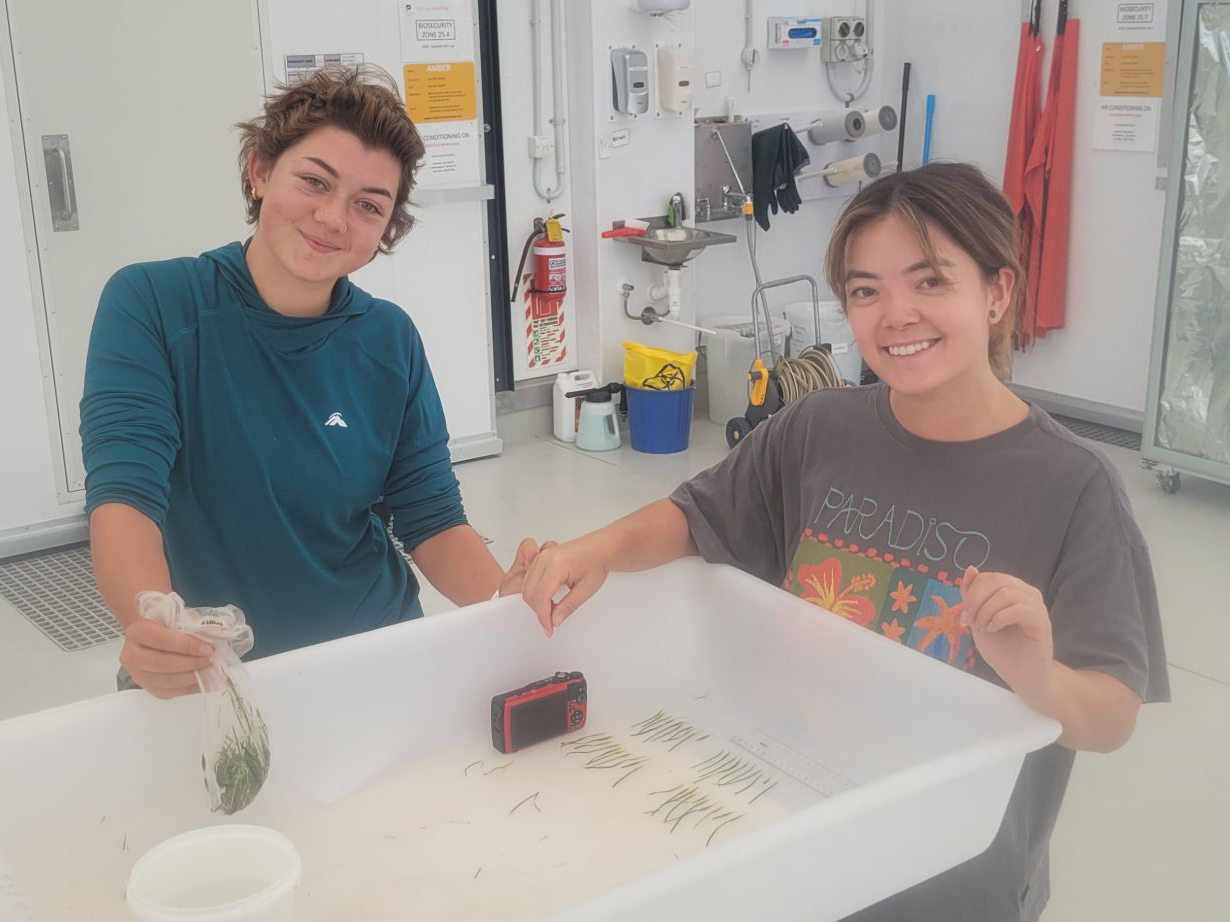
Yuki was the recipient of the Kathleen Curtis Summer Scholarship, part of Cawthron’s outreach and education programme designed to inspire emerging scientists by immersing them in real-world research. She is currently studying towards a Bachelor of Environmental Science with Honours at the University of Canterbury, majoring in Sustainable Coastlines. Her summer project focused on pioneering seagrass restoration techniques — research that sits squarely at the intersection of science, community benefit and environmental stewardship.
For Yuki, arriving at Cawthron felt both new and familiar. Several members of her whānau have worked at the Institute across generations, including her great-grandfather, grandmother and aunt. This deep family association has shaped not only her career path, but also her values.
“Through a multigenerational family connection, I’ve gained a unique insight into Cawthron’s legacy of impactful research,” Yuki said. “It’s deepened my understanding of environmental challenges and the responsibility scientists carry. I’m the third generation of scientists in my family, and kaitiakitanga — guardianship of the environment — is a core value for me.”
After her first weeks at the Institute, Yuki said the experience has confirmed her aspirations. “Working alongside Cawthron scientists has affirmed my commitment to research that benefits both people and ecosystems. This placement feels like a stepping stone towards postgraduate study, and hopefully, one day, a role in an organisation like Cawthron.”
The scientific pedigree Yuki descends from is notable. Among her forebears is Sir Theodore Rigg, one of the Institute’s most influential early figures. Educated in Wellington, Rigg went on to study agricultural research at Cambridge University. After the First World War, he returned to New Zealand and joined the foundation staff of the newly established Cawthron Institute in Nelson, working under his former mentor, Professor Thomas Easterfield.
Rigg became a leading figure in agricultural research and was appointed Director of the Institute in 1933. His contributions to science and New Zealand agriculture were widely recognised, culminating in his appointment as a Knight Commander of the Order of the British Empire.
Sir Theodore’s daughter, Dr Helen Hughes, built an extraordinary career of her own, one that bridged science, policy and environmental advocacy. Born in Nelson in 1929, Hughes grew up with the Cawthron Institute as a constant presence. As a child, she accompanied her father on field trips, worked holiday jobs thinning apples, assisted in the library and carried out soil tests in the laboratory — early experiences that helped shape her scientific curiosity.
Helen studied botany at Canterbury University College and later attended Vassar College in the United States as a Fulbright scholar. Her connection with Cawthron endured throughout her life. She later served two terms as a trustee on the Cawthron Institute Trust Board, spanning a total of 13 years.
Beyond Cawthron, Helen Hughes became one of New Zealand’s most influential environmental advocates. In 1987, she was appointed the country’s first Parliamentary Commissioner for the Environment. During her tenure, she investigated issues ranging from coal mining and agrichemical spray drift to fisheries management, flood protection and sustainable energy.
The family’s connection to Cawthron extends further still. Helen’s daughter, Sally Anne Hughes, also worked briefly at the Institute, continuing the thread that now reaches Yuki’s generation.
Appropriately, Yuki’s scholarship is named after another trailblazing Cawthron scientist, Dr Kathleen Curtis. Curtis was the Institute’s first woman scientist, a pioneering mycologist whose work made significant contributions to agriculture, horticulture and forestry. In 1936, she became the first woman Fellow of the Royal Society of New Zealand and was the first New Zealand woman to be awarded a Doctor of Science. Curtis later married Sir Theodore Rigg, linking two of Cawthron’s most distinguished scientific legacies
Those first one-hundred years were heady times for Cawthorn; former staff recall a vibrant, energetic workplace that attracted young scientists from across the country — a legacy that continues today.
For Yuki Hughes, that legacy is not something confined to history books. It is alive in the laboratories, field sites and coastal environments where she now works — and in the enduring role Cawthron plays in science, community and environmental care.
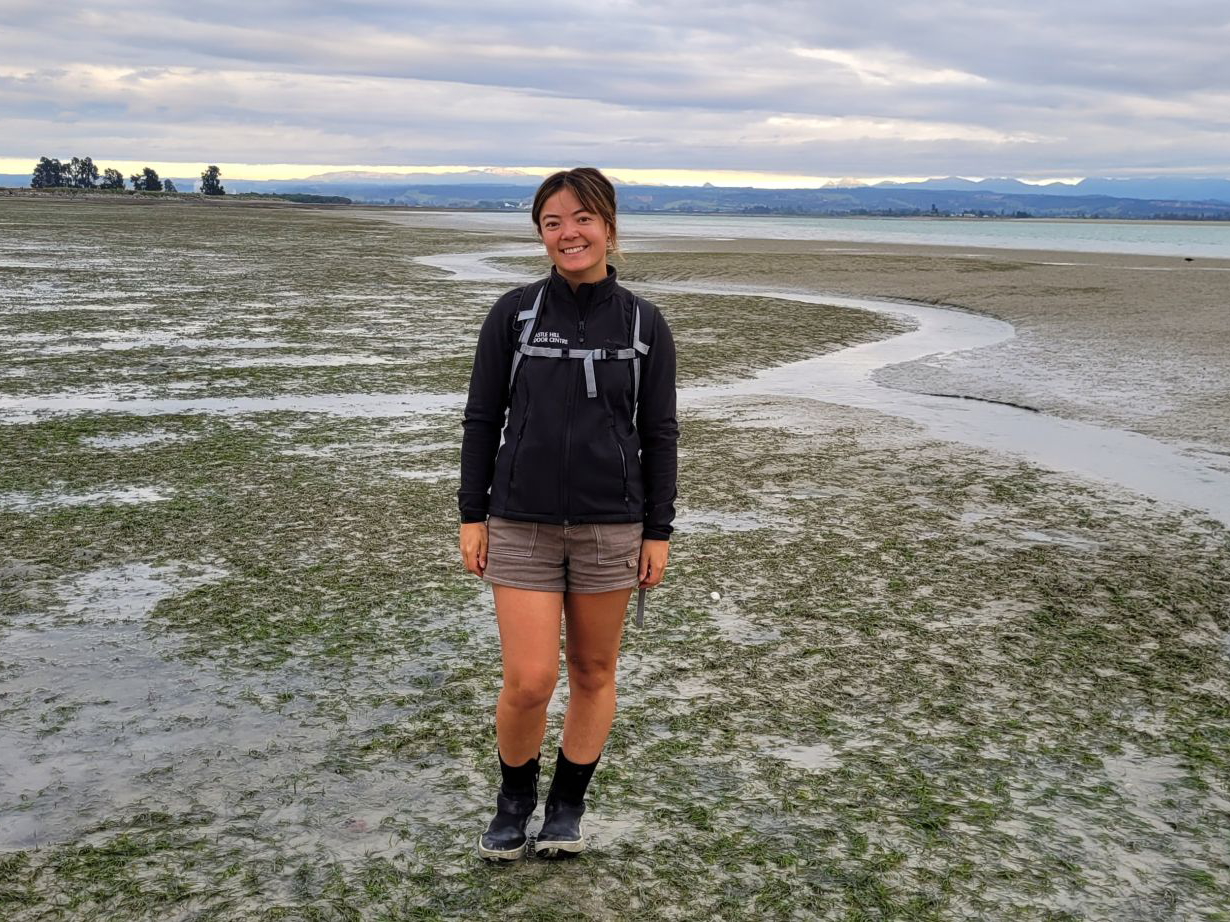
Image: Yuki Hughes