New Laser-Based ‘Chemical Fingerprinting’ Technique Helps Uncover Sources of Greenhouse Gas
27 January 2026
A Cawthron scientist and his collaborators have developed a cutting-edge method to better understand where the powerful greenhouse gas nitrous oxide (N₂O) comes from in aquatic environments — and it might change how we think about sources of climate pollution.
Cawthron Algal Biotechnologist Dr Maxence Plouviez and the interdisciplinary team behind a new study published in Biogeosciences (Earth Sciences New Zealand’s Dr. Peter Sperlich and Dr. Rahul Peethambaran, Lincoln University’s Dr. Tim Clough and Dr. Naomi Wells and former Massey University professor Benoit Guieysse) have shown for the first time that microalgae and cyanobacteria — tiny organisms that live in water — leave distinct isotopic ‘fingerprints’ in the nitrous oxide they produce. This means researchers can now begin to untangle how much of this pollutant comes from algae versus other microorganisms.
Nitrous oxide is a potent greenhouse gas and contributor to ozone depletion, with far more warming potential per molecule than carbon dioxide. Until now, scientists have struggled to distinguish N₂O made by microalgae from the gas produced by other organisms such as bacteria in aquatic ecosystems because both happen simultaneously.
Using a novel laser-based spectroscopic technique, Plouviez and colleagues measured the subtle differences in the isotopes — versions of nitrogen and oxygen atoms — that make up N₂O molecules produced by different organisms in the lab. The results show that microalgae and cyanobacteria produce N₂O with unique isotopic signatures, distinct from those formed by for e.g. bacterial processes.
“This breakthrough gives us a tool to trace where nitrous oxide is coming from in complex aquatic environments,” said Dr Plouviez.
“It opens the door to more accurate greenhouse-gas accounting and, eventually, improved mitigation strategies.”
While the work so far has been conducted in controlled laboratory conditions, the team hopes the method can soon be adapted for field studies. If successful, this approach could help scientists more accurately quantify N₂O emissions from lakes, rivers, estuaries, and coastal waters — especially in areas affected by nutrient pollution.
Understanding natural and human-influenced sources of nitrous oxide is key for climate science and policy, particularly as countries strive to meet international emissions reduction commitments.
What this means for climate action
- 🌍 Better source tracking: By identifying the source of the gas, scientists can refine models of greenhouse-gas emissions and mitigation strategies.
- 🔬 Improved monitoring: New isotopic tools could improve long-term environmental monitoring efforts.
- 💡 Policy relevance: More accurate data may help inform mitigation strategies for nutrient runoff and aquatic pollution.
The research was supported by Massey University, Lincoln University, Earth Sciences New Zealand and the Cawthron Institute, with funding support from Massey University, Lincoln University and the Agricultural Industry Trust, the Royal Society Te Apārangi Marsden Fund and Earth Sciences New Zealand’s (formerly NIWA) Strategic Science Investment Funding.
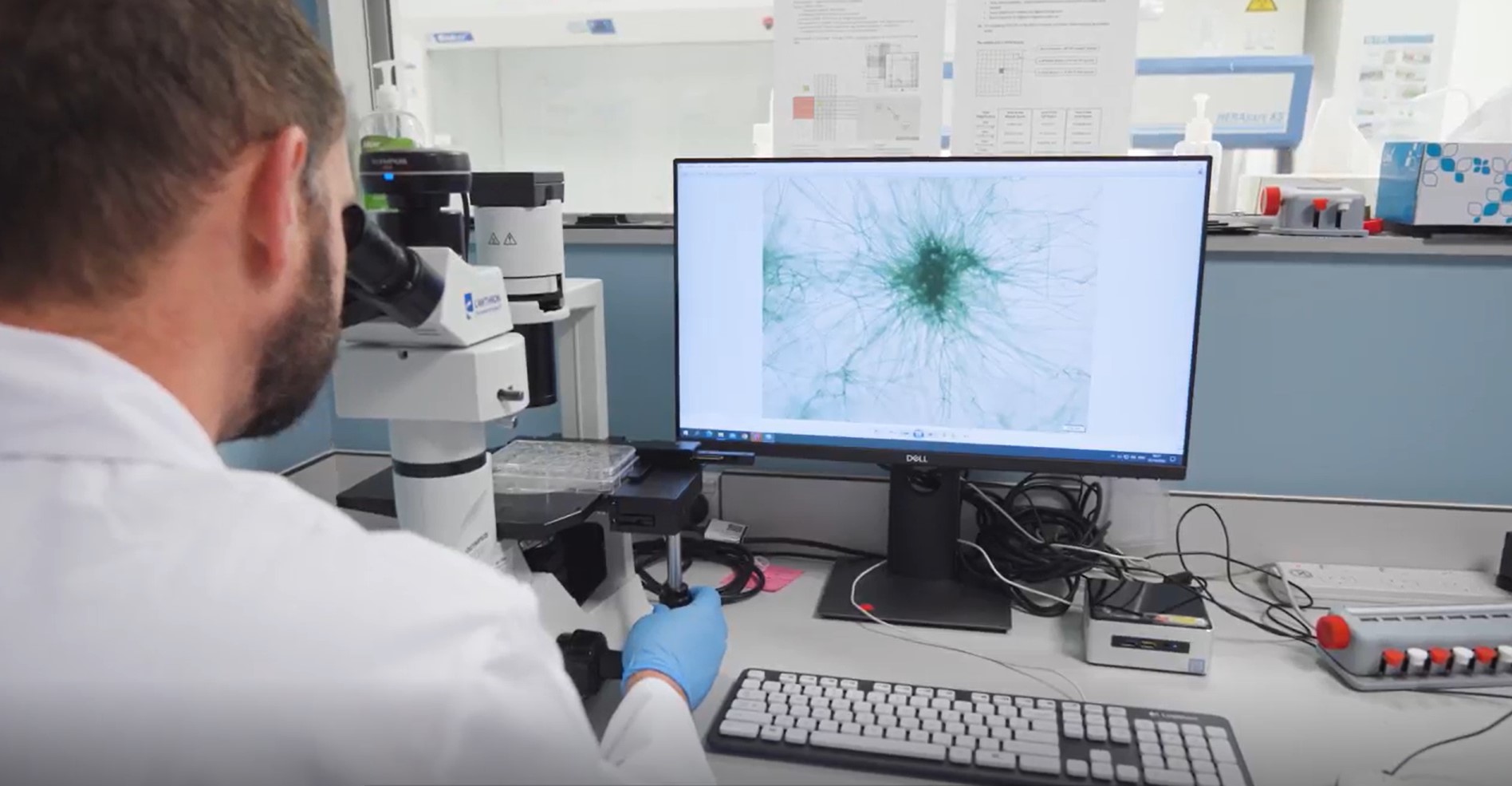
Image: Cawthron Institute. A researcher examines cyanobacteria under the microscope.