
Surveying catchment and community environment groups in Aotearoa NZ
In 2021, Cawthron Institute was commissioned by the Ministry for the Environment to survey catchment and community environment groups throughout Aotearoa New Zealand to provide insight into their activities, goals and needs.
These local groups, working to improve waterways and biodiversity, are an increasingly important feature of Aotearoa New Zealand’s environmental management landscape. The surveyed groups said they would be able to do more if the government streamlined its processes for supporting them.
Based on data from organisations that work with these groups, the Cawthron researchers estimated that there are about 1000 across New Zealand.
Survey responses from 240 groups revealed they are experiencing ‘proposal fatigue’ from spending a large amount of scarce volunteer time on funding applications, with a small chance of success, and often for only small amounts of funding. The resulting financial uncertainty is preventing many groups from making sustained progress. Activities such as tree planting require multi-year planning horizons, for example, it takes two years to grow seedlings and to clear and prepare the land.
The groups said that the funding available is not sufficient, and they want better access to technical expertise and administrative support.
The report has been submitted to the Ministry for the Environment, which is using the survey results to help design new programmes to support local catchment and biodiversity groups.
Funder: Ministry for the Environment
Researchers: Jim Sinner, Marc Tadaki, Alaric McCarthy, Edward Challies, Jacob Thomson Laing.
Contact Jim Sinner or Marc Tadaki.
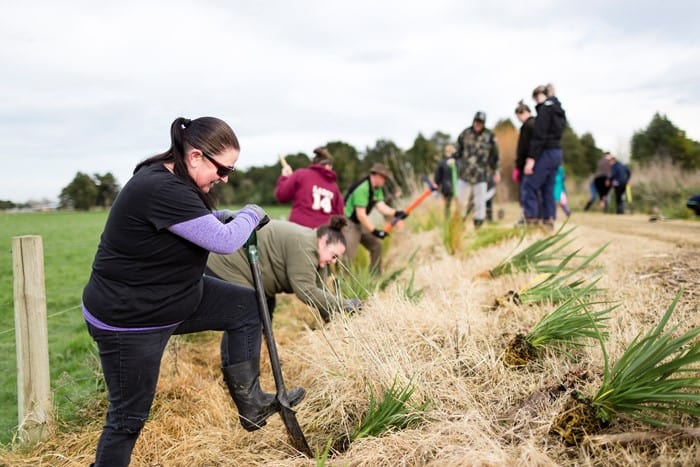
Image: Horizons District Council. Community planting day of Manawatū River.
Jim Sinner
Social Science Manager
Marc Tadaki
Social scientist

Other freshwater health projects

Maria Agudelo
Maria Agudelo Data EngineerRole at...
Inaugural Ring Science Scholarship recipients announced during Seaweek celebrations
Two rising stars in science, Freya High and Jasmin Malcolm, have been named the inaugural recipients of the Ring Science Scholarships, made possible through a generous bequest from Jim and Fleur Ring to Cawthron Institute.
Cawthron partners with Te Rūnaka o Awarua to enhance resilience of tio/bluff oyster
Cawthron Institute and Te Rūnaka o Awarua are advancing a new initiative focused on enhancing the resilience of tio, the iconic Bluff oyster, as a taoka species.